

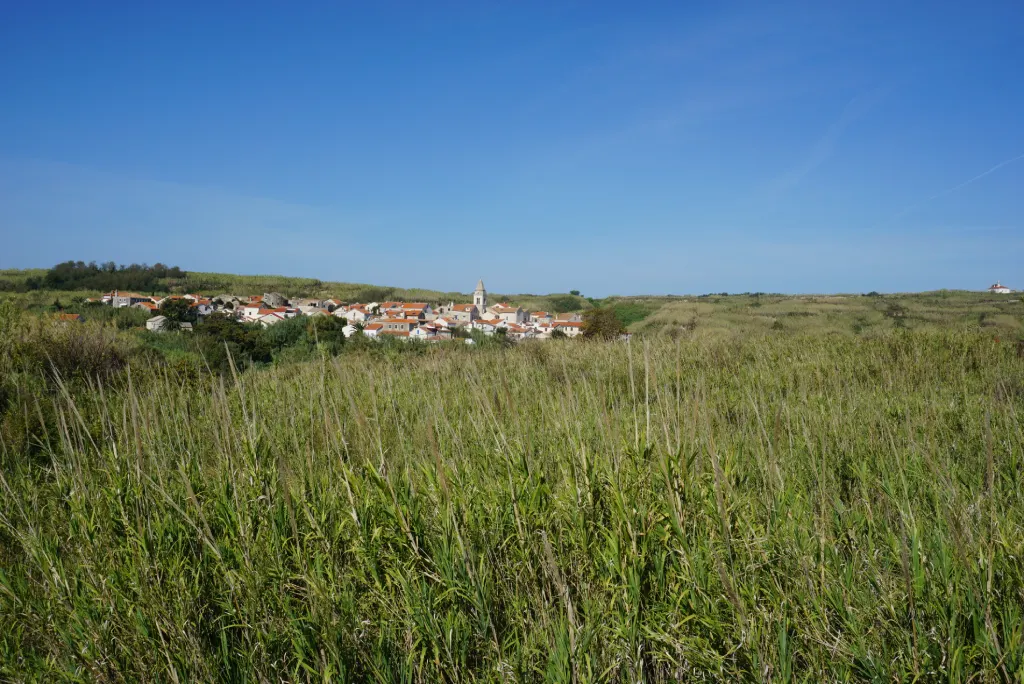
Tucked away on Kvarner Bay’s horizon, Susak stands out as the only Croatian island almost entirely covered in fine sand, with picturesque blackberries, charming tiny stony houses, and sprawling vineyards. This rare sandy terrain sets Susak apart, creating a true island sanctuary.
A salty breeze lifts across the catamaran’s deck, carrying the soft hush of distant engines and the tang of sea air as the first blush of morning paints the horizon. Gritty grains of sand already cling to your shoes, caught on the wind long before you step ashore. If you crave slow, unhurried days, meaningful connection with nature, and escapes from the bustle—whether you travel solo, with your partner, or seek a tranquil family retreat—this guide is for you. Let yourself step into Susak’s peaceful rhythm and discover who this rare gem is truly made for.
Kvarner is full of coastal island promenades that will immediately captivate us with their peace and beauty, offering enjoyment for slow walking or jogging. For example, the ones we like to write about most are Tramuntana, which stretches along the northern part of the island of Cres, or Krk’s Vela and Mala Luka.
But Kvarner also hides other beautiful oases for slow walks. I would say that one of the hidden but beautiful ones is the trails on the island of Susak, whose structure attracts attention – it is an island made of sand and is accessible by catamaran from Rijeka, Pula, and Zadar. And as we approach spring, there are more and more ideas for where to find a place for an active, slow-paced vacation. One of the ideas is certainly Susak.
Sandy Susak is ideal for those who dream of a time-travel experience
Susak. Tucked away on the horizon of the Kvarner Bay, Susak is full of sandy beaches, blackberries, tiny stone houses and spacious vineyards. Lovers of slowness, nature and sand will be delighted by the sandy paths and magnificent viewpoints. They stretch to the surrounding islands of the Kvarner Bay and Učka on one side and all the way to Velebit on the other. Unlike the coast, which is a mix of sand and rock, the heart of the island is green, with spacious landscapes. We can actually say that Susak is an island of an enchanted mixture of sea and countryside, mostly made of sand.
When I first arrived on the island of Susak, the morning air was still crisp, and the sand beneath my feet felt cool and powdery. As I stepped onto the spacious, long sandy beach, a quiet hush lingered on the shore, broken only by the soft lapping of waves and the call of distant gulls. Although Croatia’s rocky coast may not have many sandy beaches, you can find them if you look in the right places. And indeed, a trip to the island of Susak is one of those that will especially delight us seekers of natural coves in search of slowness.
This most remote island of the Kvarner Bay, with its magnificent coastline, has its own story, just like any other. And it changes with each new visit. So far, I have travelled to Susak twice. And both were unique. Based on those visits, I am sharing my one-day adventures from Susak below. Perhaps it will be useful for those going to Susak for the first time and for some to remember their trips to that island.
One-Day Loop: Quick Itinerary at a Glance
- Arrival: Morning catamaran (approx. 1.5–2.5 hours from Rijeka, Pula, or Zadar)
- Start: Disembark at Susak port, walk through Donje Selo (10 minutes)
- Swim: Relax on Spiăza Beach (30–60 minutes)
- Climb: Walk up stairs to Gornje Selo (15 minutes)
- Sights: Parish Church, blackberries & vineyards, walk to the cemetery (20–30 minutes)
- Explore: Chapel of Our Lady of the Annunciation and views over Bok Bay (20 minutes)
- Scenic: Hike to Vela Straža (fortress/lighthouse loop, 30–50 minutes)
- Descend: Sand passages down to Donje Selo (20 minutes)
- Refresh: Coffee break and final swim before afternoon/evening catamaran
Approximate walking distance: 7–8 km, mostly easy sand and paved village paths. Allow flexibility for swims, vistas, and cafe pauses! This loop fits comfortably into a single day for most visitors.
Things to do on Susak Island: discovering blue horizons, sand and quiet green corners
Unusual and unique, Susak is one of those fantastic places for solo travellers, and will especially delight lovers of the island’s slow rhythm.life. The lonely, peaceful island is mostly sandy. It is overgrown with grass and reeds. In the heart of the island, low vegetation prevails. Susak is actually the perfect place to slow down. Wild and untouched, perfect for hikers seeking solitude, couples looking for a romantic vacation, or families seeking an escape in nature and enjoying swimming in the sand. For all those who are looking for a bygone, slow time, I would say it is ideal.

Covering an area of approximately 3.8 square kilometres, the small island in the northern Adriatic Sea has managed to avoid large hotel complexes. At least for now, we won’t find them there! Just for the record, I am writing this text in the fall of 2023 and publishing it in 2024! What Susak will reveal to us are crystal-clear sandy beaches, vineyards, two picturesque villages and trails with views of the turquoise Adriatic Sea. The combination of sand and rock on the limestone plateau has made this island attractive to lovers of the outdoors and beaches.
An island made of sand
The island is geologically different from the others in that it is mainly formed of fine sand, laid on a limestone bed. The limestone bed keeps the sand above sea level and prevents it from being washed away by the sea. Although the origin of the sand on the island is not fully proven, scientists believe it is due to sediment deposition from the Po River in Italy. Namely, during the last ice age, which rose above the surface due to tectonic activity, most of the deposits were washed away by the Po River. Other rivers from the Alps and the central Apennines brought sediment carried by the winds, forming the area of today’s Adriatic.
These processes occurred during the glacial era, which lasted from 300,000 to 130,000 years ago, and recent research suggests a range of 700,000 years. The sea level was once about 100 meters lower. The entire area of today’s Adriatic Sea north of the Zadar-San Benedetto del Tronto line in Italy was a dry valley, through which the Po River flowed, with tributaries from the west, north and east. In terms of appearance and soil composition, this area could be compared to today’s Srijem.
Get waked in the morning on Susak
The morning starts early, with an alarm ringing at 5 am to catch the catamaran from Pula, which sails for Susak at 7 am. The low buzz of travellers fills the dock as we shoulder our bags and climb aboard. On deck, the air is tinged with salt and quiet anticipation. Some sip coffee, chatting softly or gazing at the shimmering horizon, while others seek out the best spot to watch the sunrise break across the sea.
As the boat cuts through gentle waves, a cool breeze carries the laughter of children and the distant call of gulls. Soon, we dock briefly in Unije, and just after, Susak appears on the horizon. The excitement builds as the first bell tower of Gornje Selo comes into view, rising proudly above the rim of soft, sandy vegetation. It’s a moment when the island’s unique character, with its unusual landscapes, welcomes every new arrival.
Put your luggage onto a lawnmower or bicycle after disembarking on the pier
The first point of contact after disembarking on Susak is the port, an indispensable part of every island. This is also the case with this one, which has two settlements (or villages), Donje Selo and Gornje Selo. Recently thoroughly reconstructed and suitable for docking catamarans, the port is typical in every way.
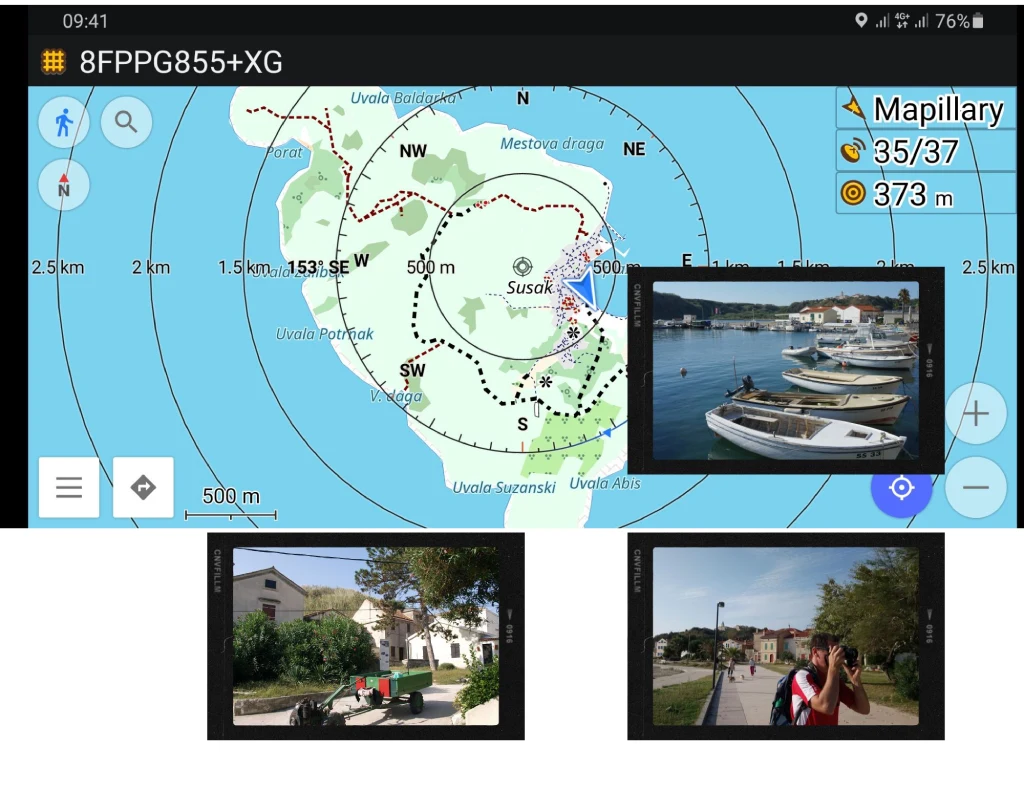
The pier with the quay is the only place in the Spiaza bay where the water is deep enough, since there is a shallow sandy beach opposite. Of the three piers, the largest is the one where large ships dock for daily trips, while boats are anchored on the inner side. But what is most fascinating and can only be experienced here is the “typical” form of transfer, which is trailers, carts or carts, which are used for local transport. They are most often attached to lawn mowers, mini tractors or even bicycles, like rickshaws.
The small pier is the only thing left from the fish factory era, and with the arrival of the ship, it actually becomes the location of an open-air festival. The arrival of the ship has always connected and separated the island, and I would say this custom remains to this day. In particular, we see the same in the warm welcome the ship receives from the local people. Next to the small pier, now a pile of scattered rocks, is an old factory being converted into a hotel.
Stop by the school and shop
Walking along the waterfront, we reach Donji Selo’s outskirts. After passing the restaurants, there’s a shop open mainly in the mornings, and a nearby post office with similar hours. Stepping inside the shop, I was greeted by the owner, who smiled and said, “Morning! If you need tomatoes or fresh bread, better be quick—they go first.” This brief exchange captures the spirit of Susak, where even errands feel unrushed and welcoming. It’s perfect for seekers of slow-paced living!
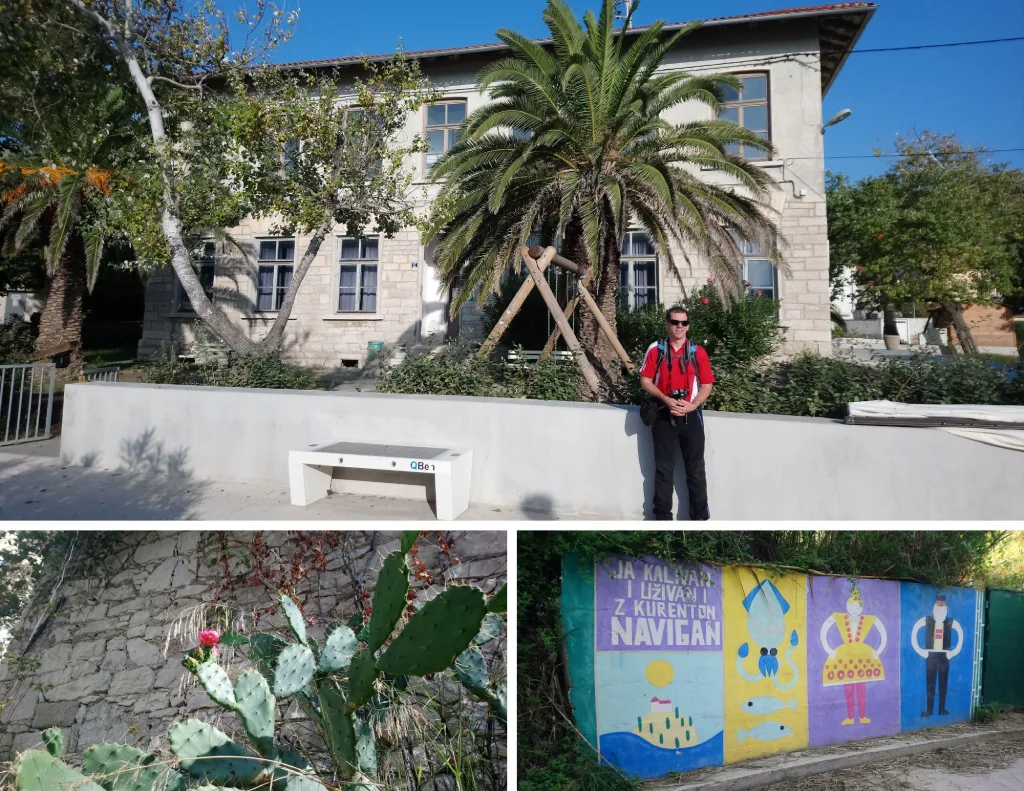
One of the landmarks we also come across is the school. The building, whose facade dates back to the Austro-Hungarian period, is still in use today. Namely, during the 18th century, the island was under the rule of the Habsburg monarchy, which, in addition to the school, built a summer resort, a health resort and a promenade, connecting the two largest lighthouses with sandy coves (1885). A land registry (cadastre) was introduced. After the Austro-Hungarian Empire, the island fell under Italian rule, and Italian became the official language. Today, the school is a place for learning, for the first four years, and after that, students continue their education in Mali Lošinj for the remaining four years.
Find the most famous beach is Spiăza in Donje Selo
Now comes what we came for. Or at least one of them. The beach? Maybe. Yes, Susak certainly has many beaches. And the beach, the most famous and the first thing that catches your eye when you arrive on the island, is located in Spiaza Bay, where the water reaches up to your knees.
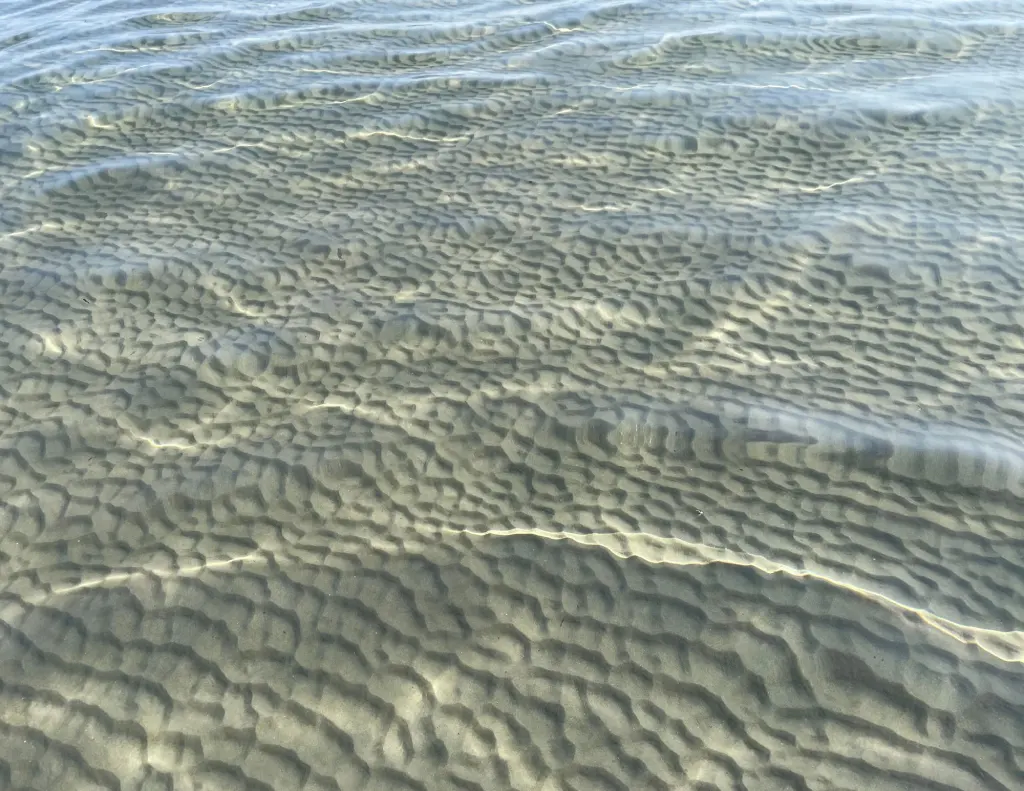
It is the largest bay on the island, located on the western side, next to the small town of Donje Selo. And not only that. The beach is made entirely of sand. Namely, one of the main reasons why people visit this island is to swim on this magnificent sandy beach. But as you step into the gentle shallows of Spiaza, something unusual happens: time seems to slow down all around you. The water is so shallow that you cannot simply dive in with a single leap; instead, you wade slowly, feeling the sand beneath your toes, wandering further out as the water inches up your legs. Here, the landscape itself asks you to linger, to savour every moment in unhurried rhythm. So, if I were to go back to the beginning of this article, where I asked you why (among other things) we came, I would say sand—and the gift of slowness it insists upon.
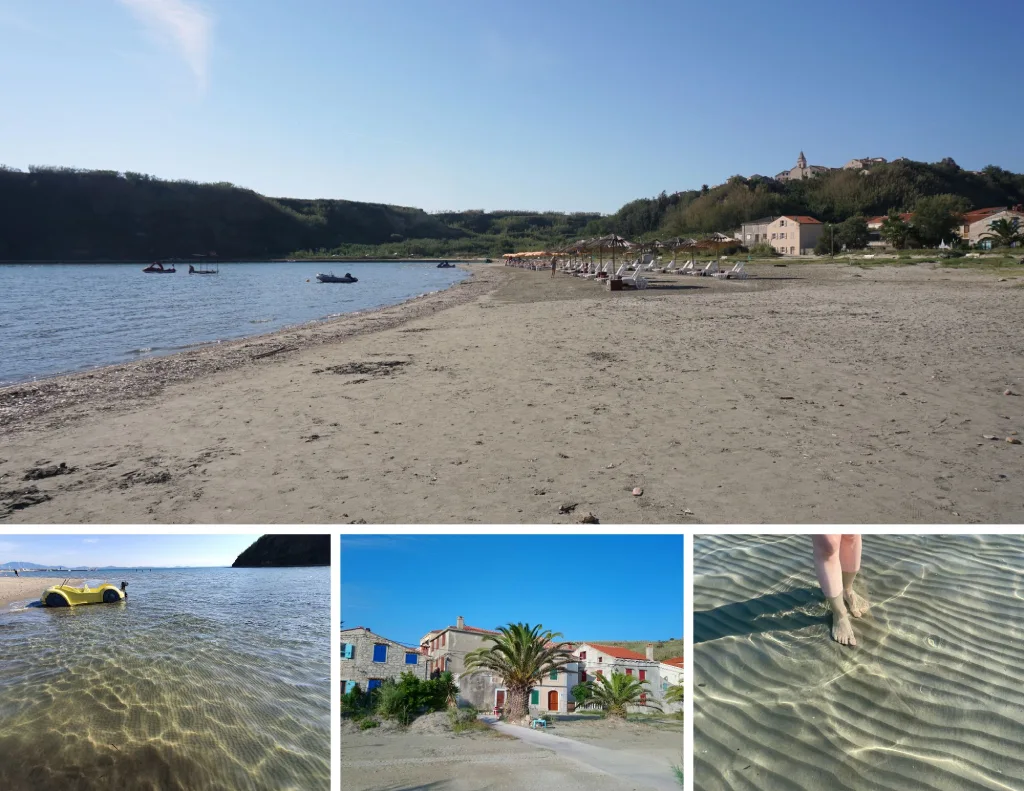
Yes, sand and lots of it. Because this is an island of sand! Shallow water and soft sand make the beach ideal for all ages. And… what thrilled me was that you can walk almost a few hundred meters into the sea. This means that for those learning to swim, there is no danger of drowning. This sandy beach, illuminated by the sun’s brilliance, is a real morning inspiration. And there is a little bit of everything. You can rent a parasol, a deck chair, a pedal boat, play volleyball, or have a drink. Or… simply freshen up as we did and continue exploring this magical island. For those who appreciate slowness, there is time to explore this beach before starting the island tour, because Susak offers time. The morning is just perfect for swimming on the beach, and after sailing, it is just a real awakening. Good morning, now is the time to get to know the island of Susak!
Day: created for a variety of adventures with a touch of the past and an Adriatic island atmosphere
Walking on the sand and swimming for a short while, we notice the bell tower rising above the bay. And that draws us to start exploring this island as soon as possible. Susak is perhaps best known for its perfect harmony of sand and roads, but it is also a place where centuries of history meet the present in a single instant. Here, a child texts friends from atop centuries-old fortress stones, and a medieval bell tower rises above beaches dotted with colourful umbrellas. The small island has often been affected by changes in global historical relations: after it was probably first settled by the Illyrians and a fortress was formed, the island was discovered by the Romans. Susak is also mentioned by Pliny as a “sandy island not far from present-day Pula”.
The earliest written document mentioning the island of “Sansagus ” is the Venetian chronicle of Ivan the Deacon from 884. The island, also known as Sansego, today abounds in heritage sites. They are the result of different governments under the Ostrogoths, Byzantines, and Benedictines. During the Middle Ages, an ancient dialect was formed. Many of the island’s current and former inhabitants, who emigrated mainly to America, still speak it today.
Admire the old village of Dornje and meet new friends while seeking the steps
The first thing we see upon reaching the bay is the picturesque Donje Selo. It stretches from the ferry to Spiaza beach. The typical stone architecture and narrow streets, as well as the economical island construction, are the main attractions. We take a short walk through the northern part of the village while the autumn rays of the sun illuminate the stone houses. Since Donje Selo extends to the ferry dock, we will take the street south for the return. We therefore climb to Gornje Selo via an interesting mix of stairs and paths. The climb to Gornje Selo can be approached from several directions.
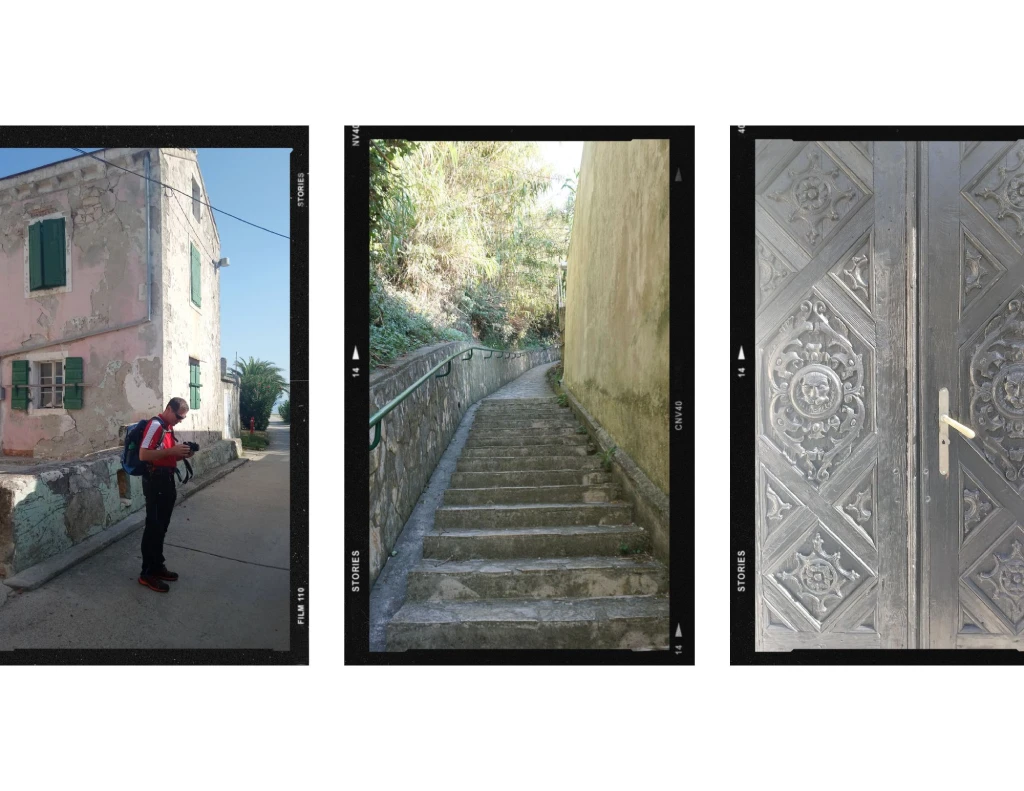
As I said, we see many passengers and tourists on the ship, but we make acquaintances only during the sightseeing in Susak. Often, during my visits, I made my first contacts with other “accidental travellers” eager to get to know this island during sightseeing or after the climb to Gornje selo. Since the island is small, further sightseeing is inevitable, and we will meet again.
Climb the magical stairs leading to Gornje Selo
What you absolutely cannot miss while in Susak is climbing to Gornje Selo and walking through the town. A short but relatively steep path leads up the stairs from the bottom to the upper village. You may be wondering how the stairs can represent a significant point. Since Susak actually consists of two places: the older upper and lower ones, they are connected by stairs.
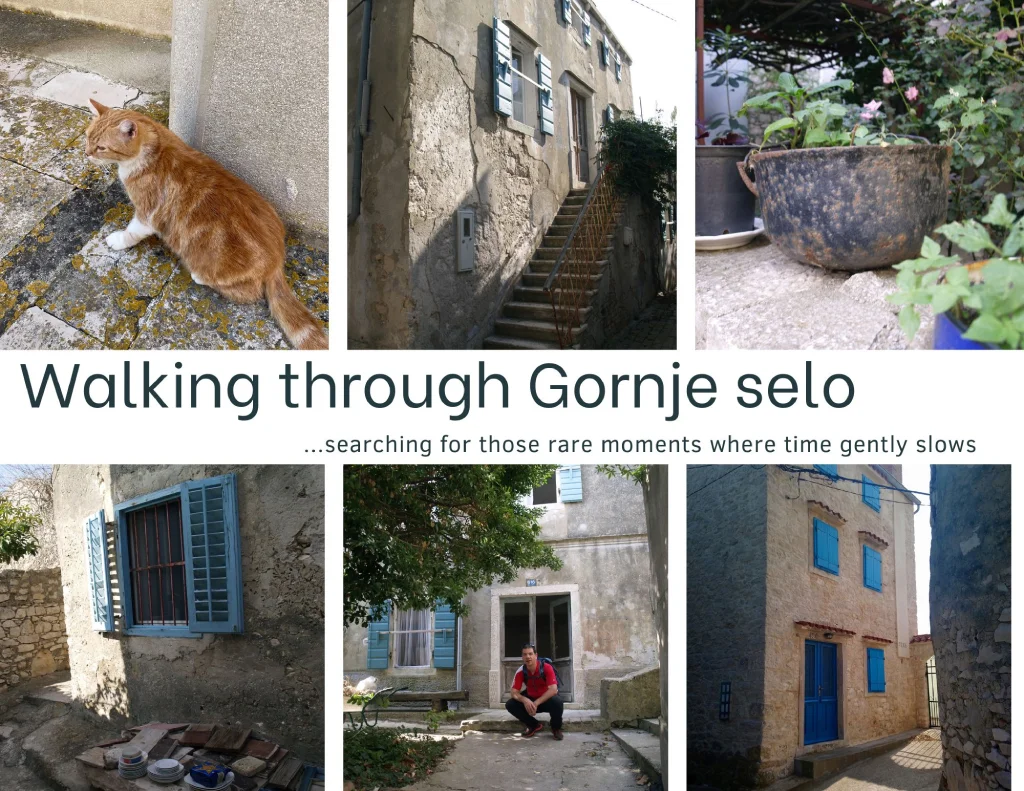
Climbing up to the old town, we will notice that the climb is worth every step… Most visitors will only see the main stairs, but I recommend walking in the other direction as well. And once we climb to Gornje Selo, we realise that time flows differently there than in big cities. With slow steps, every day is filled with island charm and tradition. The picturesque streets of Mediterranean architecture exude the spirit of centuries-old heritage in every stone of the houses. With the scent of Mediterranean herbs and the sound of wind and waves, here every moment is an opportunity to discover the incredible beauties of island life.
Will you pause for a sweeping view at the top, or first let yourself get lost in the maze of narrow side lanes? Perhaps you will choose a quiet corner to breathe in the island air, or seek out a sunny terrace with panoramic vistas. The choice is yours: here, Susak invites you to shape your own adventure through its timeless upper village.
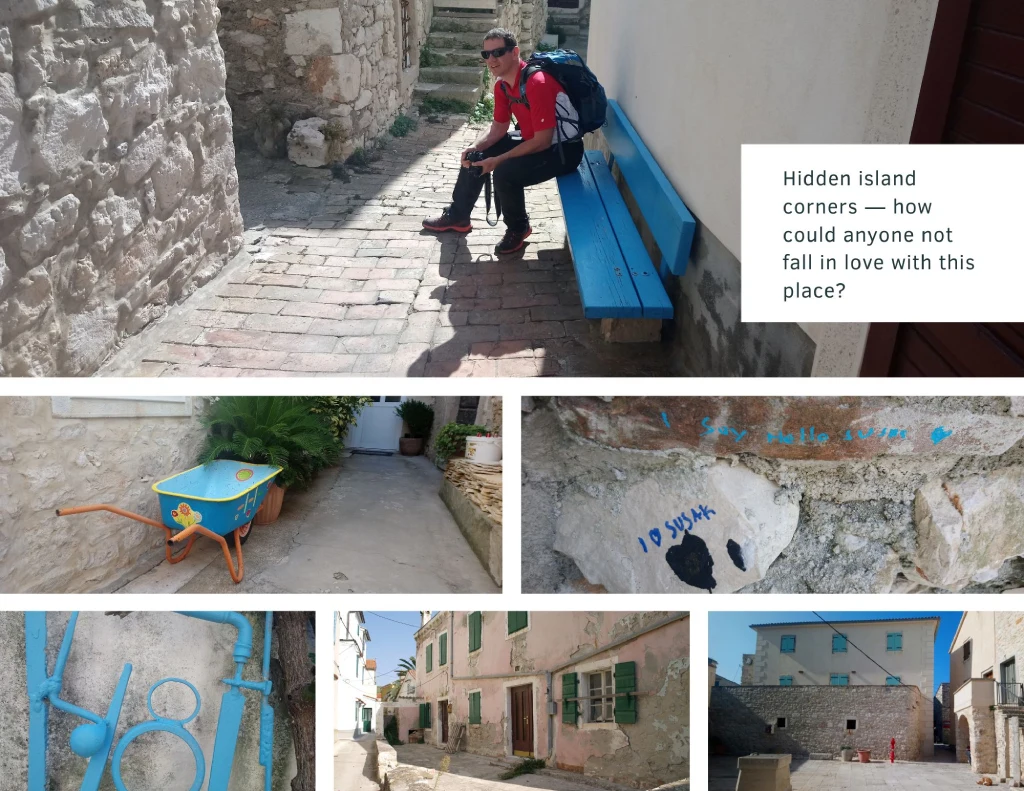
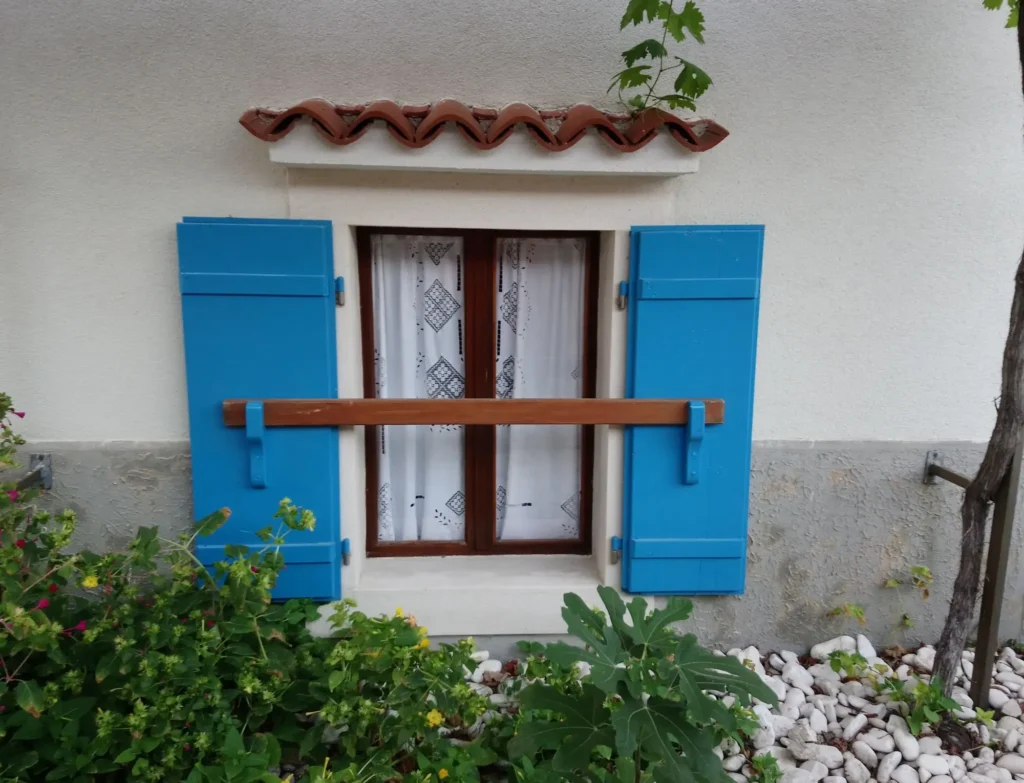
The Upper Village has a typical stone architecture. It is characterised by an island structure of narrow passages. The houses are connected; most of them are interconnected. Although it can be considered a labyrinth, you will not mind getting lost. At the same time, every direction you decide to walk will lead you to a view – a perfect picture that stretches to the lower village and the Spiaza bay . The locals, with their distinctive dialect, are friendly and helpful. A really small town atmosphere!
Marvel Saint Nicholas Parish Church
The parish church, dedicated to Saint Nicholas, the patron saint of sailors and children, is located in Gornje Selo. The church, just above the stairs, dates from 1770. The church’s location atop the ruins of a Benedictine abbey makes it a sight to behold for miles around. When monks from the town of Osor on Cres moved to Susak, an abbey was formed. In the 14th century, the abbey was abolished, but continued to function as a monastery until 1770. A parish church was then built on the island, with the present altar of Our Lady of Mount Carmel erected on the abbey’s sanctuary.
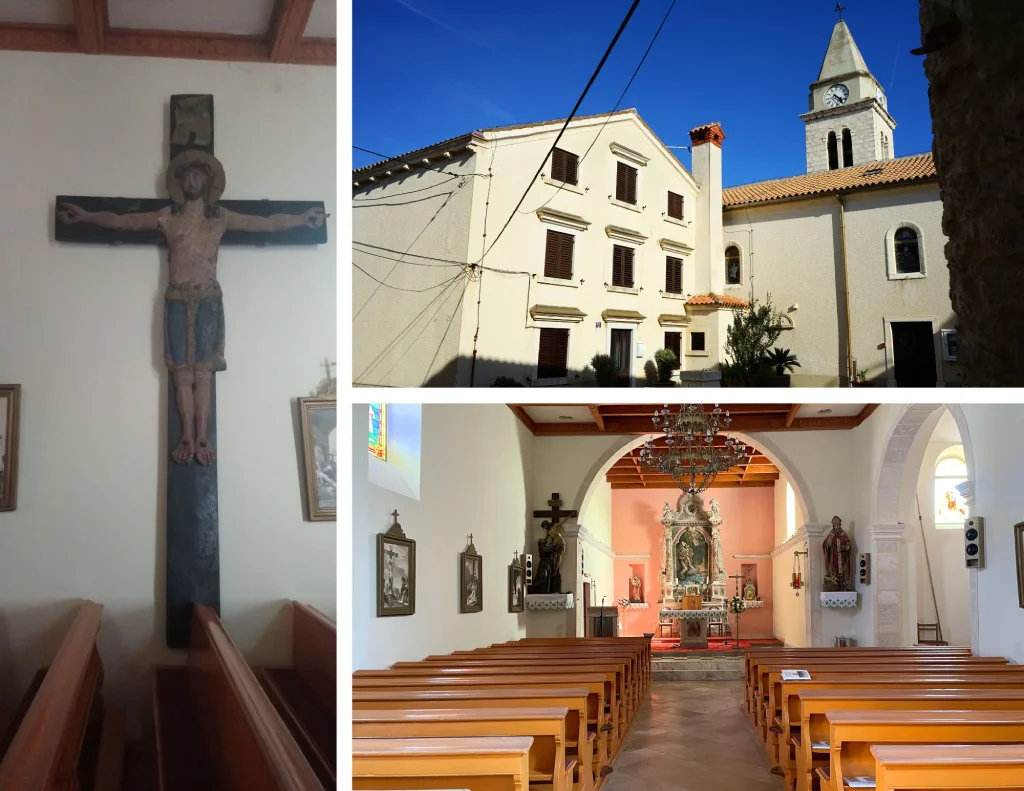
The only traces of the Benedictines that remain are the stones exposed on the church wall. In addition to the altar, which is located in the same place as the sanctuary, other relics are also placed inside. The most important is the cross called “Veliki Bouh”. The wooden cross washed away by the sea was made in the 12th century. Legend has it that the wooden cross easily entered through the church door when the inhabitants put it away during a storm. However, it was never able to get out again. Next to the church is a point offering views of the sandy beach and the waterfront.
Find the blackberry trails (in autumn)
After sightseeing, the real adventure is just beginning. Bays and sandy paths await us for sightseeing. But also some sights. First, we will head towards the northern part of the island. And along a path covered in blackberries! If you visit the island in early autumn and walk along the path through the vineyards, you can’t help but notice the blackberries. Modern vineyards established in the 90s of the last century are a major feature of the island’s heart. They were leased to the Italian winery Cosulich . Thus, the winery was founded by merging several larger plots.

What is characteristic is that all the vineyards are surrounded by a blackberry hedge. In fact, this island is overrun with blackberries. Most of them are located on the plateau east of the cemetery. Head towards the cemetery, and take the left path towards the chapel above Cape Darto; it will take us along the vineyard path. The hardworking islanders pick blackberries at that time, and in order to know what these indigenous products are like, try some for a tasting in agreement with them.
🗺️How to get there?
🥾By foot. Head to the cemetery, and before you reach it, at the end of the concrete, turn left. It is around an hour’s walk to reach the chapel.
🚶Activity type: gentle hiking or mild walk
⏱️Duration: 1-2 hours (depends on the endpoint)
Cemetery
Walking towards the northern part of the island from G.Selo, we come across a crossroads with a large cypress tree. One of the rare trees on the island of such height hints to us that we are next to a cemetery, a peaceful place of silence. Before the entrance, there is a wooden bench, which is ideal for a break in the shade of the cypress tree. Some will seek peace here to read or write during a summer day.
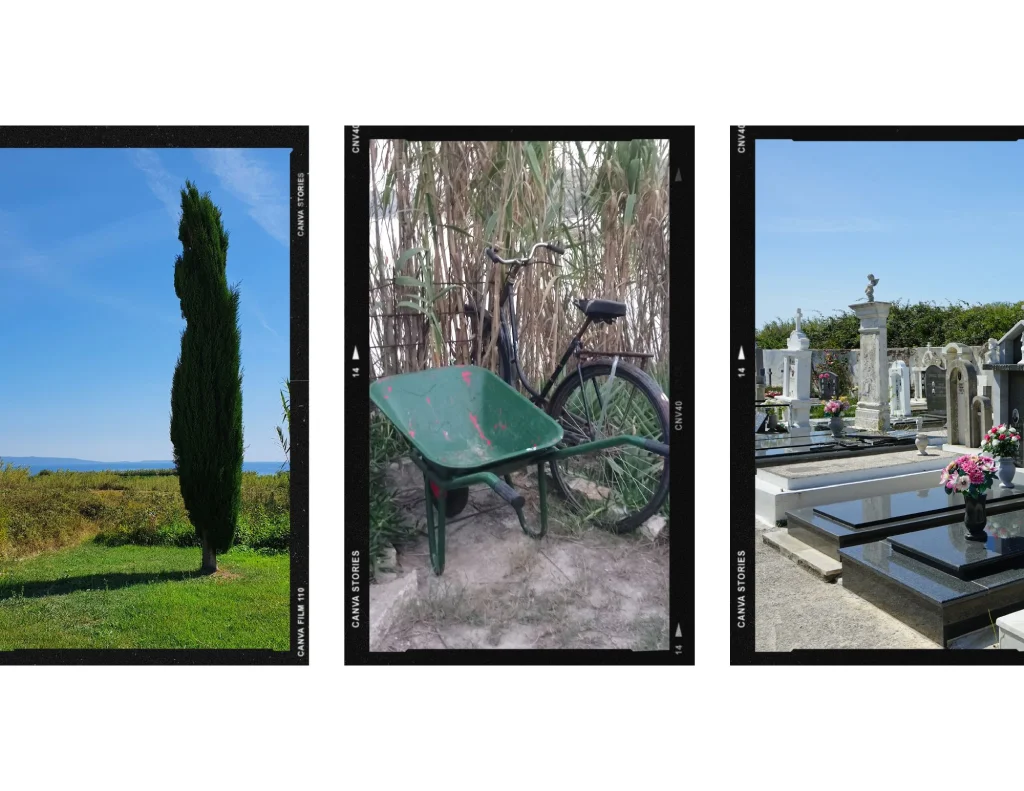
The cemetery is located in a real, very relaxing, and sacred place. It was moved in 1887 from the old place next to the church in the upper village. The Chapel of Our Lady of Sorrows, where the priests of Susak are buried, is a sight to see. A newly paved road leads to the cemetery from the upper village, a few minutes’ walk away. There is a crossroads next to the cemetery; from here, I recommend continuing the tour towards Cape Dart.
Take a “Pilgrimage” walk to the Chapel of Our Lady of the Annunciation at Darto Cape.
One of the three religious buildings on the island is located on Cape Darto above Bôk Bay. Simply following the path along the vineyards from the cemetery towards Bok Bay and Cape Darto, we reach a narrow clearing from which we can see the chapel at the top of the cape. A small and modest building, white and simple, but at the same time special. The votive chapel was built by the locals in 1930, as a sign of gratitude to Our Lady of the Annunciation for protection from the sea and storms. This is not surprising. Just below the chapel is an indented rocky coast, with a different structure to the one we are used to seeing from the pier. The view from here stretches towards Lošinj, the eastern part of Kvarner, and even Učka. A corner created for lovers of slowness.
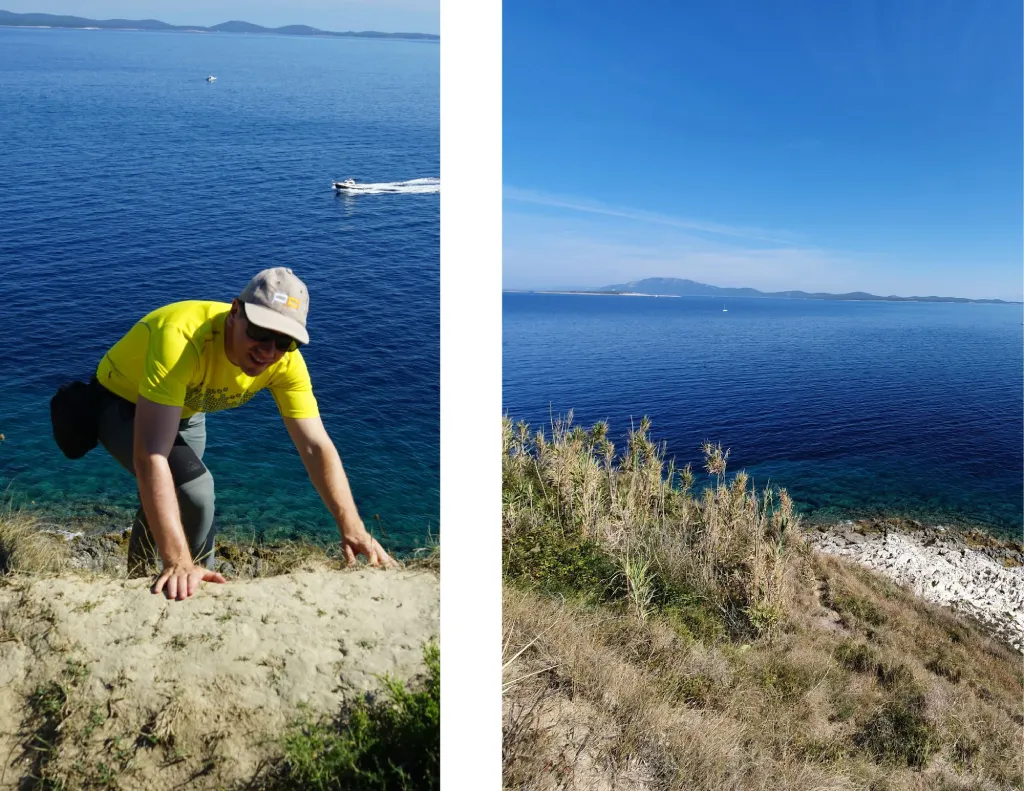
The moment’s uniqueness is enhanced by views of the sea and the greenery surrounding the island. A sense of peace and tranquillity truly reigns in this small and special place, in the eastern part of the island. The chapel, which normally gathers a procession once a year, starting from the church of St. Nicholas in Gornje Selo, is about an hour’s walk away.
🗺️How to get there?
🥾By foot. To get to the chapel, first follow the pathway to the cemetery. Before the cemetery, go left in the direction of “Bôk Bay”, but instead of turning left to the bay, continue walking forward at the last crossing, then go straight for another 10-15 minutes. The walk to the church takes about 1 hour.
🚶Activity type: gentle hiking or mild walk
⏱️Duration: 2-3 hours
📌Location: East
Cape above the bays of Bok and Tijesni
After resting at the chapel, we can explore the rest of Susak. It is not small, but for those who appreciate slowness, the choice of activities is not wrong, as there is time on Susak. Susak has many beaches, and the ones below us showcase its diversity. Moving from the chapel back towards the cemetery (or vice versa) on the northern side below us, in shallow, soft sand, lies Bok Bay. Unlike Spiăza, there are no houses, bars or any shops on Bok. From time to time, someone rents umbrellas and chairs, but that’s all. From above, we can also see small boats and yachts that are anchored. It is easy to return from there, but for a real island adventure, I advise continuing to explore.
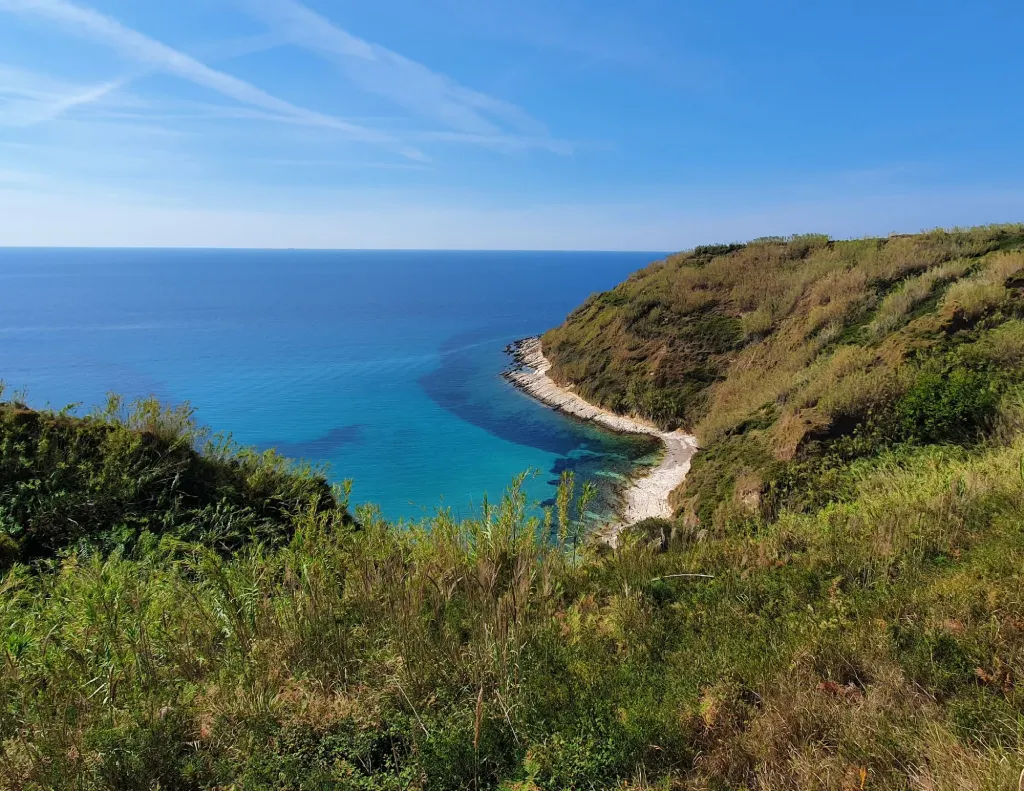
On the south side, across Bok pod nama Bay, is Tijesni Bay. Not quite as narrow as the name suggests, the bay has numerous shallow rock pools and a very picturesque bottom. Divers will find a break here, because of its location, this bay offers no shade… at all. Whether or not to go down to these bays is a personal choice. The charm of slowness is that we enjoy what we have chosen. Even though we praise slowness, how much we see in a day depends on the length of the day.
Along sand paths to magnificent views
Returning to the cemetery, we continue toward the lighthouse and an interesting point on the island, known as “Vela Straža”. Although we are in the very centre of the island, a sandy path leads us there. A combination of sedge, Mediterranean vegetation, blackberries, sand and the occasional water pump. And only the island views that stretch out in all directions give us a sense of the freedom of the flow of time. And in the distance, the lighthouse seems to take us back to the past. The feeling of fulfilment that we experience here is not just physical – it is a journey through time, through history and the stories that were hosted in these areas long ago. The true authenticity of the Mediterranean!
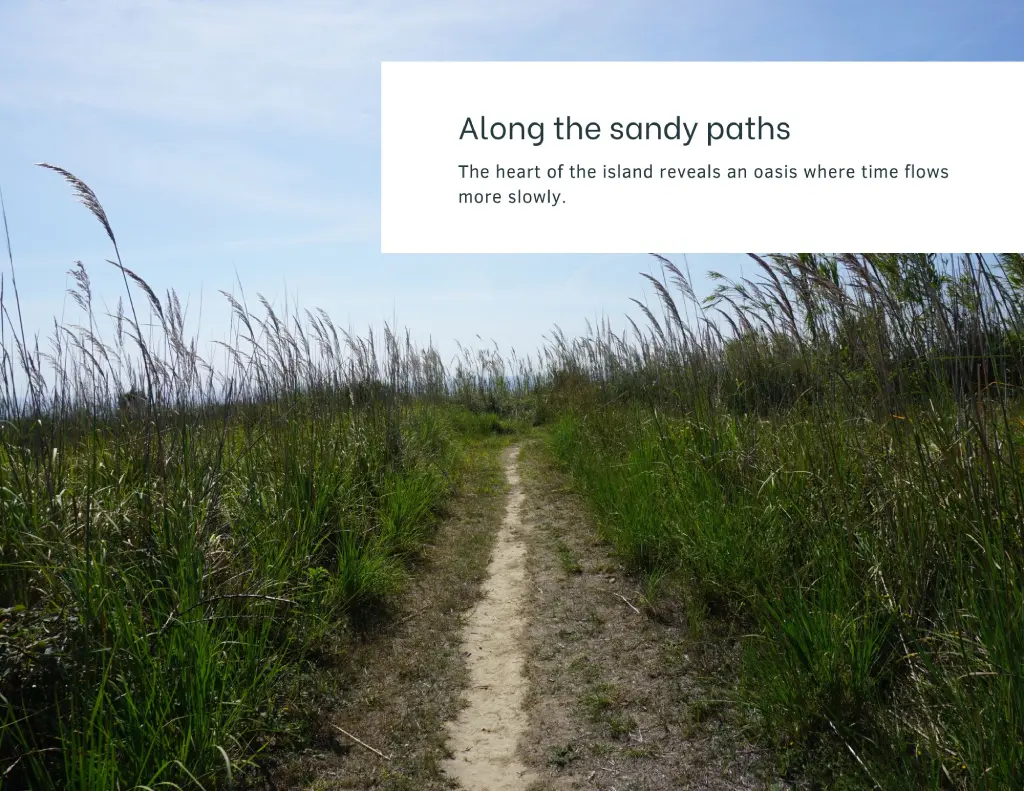
Walking along this path, we feel each step turn into a dance with tiny grains that gently bend beneath our feet. Sand! As if we are on a sandy beach. A breath of wind carries the scent of salt, and the sun shines on us. Lost in this landscape, every moment becomes an opportunity for discovery, for immersion in the depths of our own being. Susak is not just an island, but a magical refuge that invites us to explore its paths and find inner peace in harmony with nature. Approaching the point “Vela Straža”, I will briefly interrupt the harmony of the island’s beauty and note that in this part of the island, there is actually not much vegetation. So, sun gear, cream, sunglasses, cap, and hats are in the equipment!
Get to reach an Abandoned military outpost Vela Straža
As we follow the sandy blackberry path, our adventure reaches its climax at the Vela Straža fort. We find it in the shade of a branching path: the eastern one leads to the lighthouse, and the western one to the fort. Elevated on a hill above the island landscape, Vela Straža offers an interesting experience for explorers. In addition to the fact that we remember it as if we were reaching a peak, climbing the sunlit path on Vela Straža, it seems that there is something here. Yes. As the name suggests, it is a former guard, or rather a fort, set up in the 12th century. At that time, the island was often attacked by pirates and Uskoks, so the fort was built for defence. The destroyed foundations can still be seen today. They are reflected in the building, built in the mid-20th century, which is primarily a legacy of recent military activities.
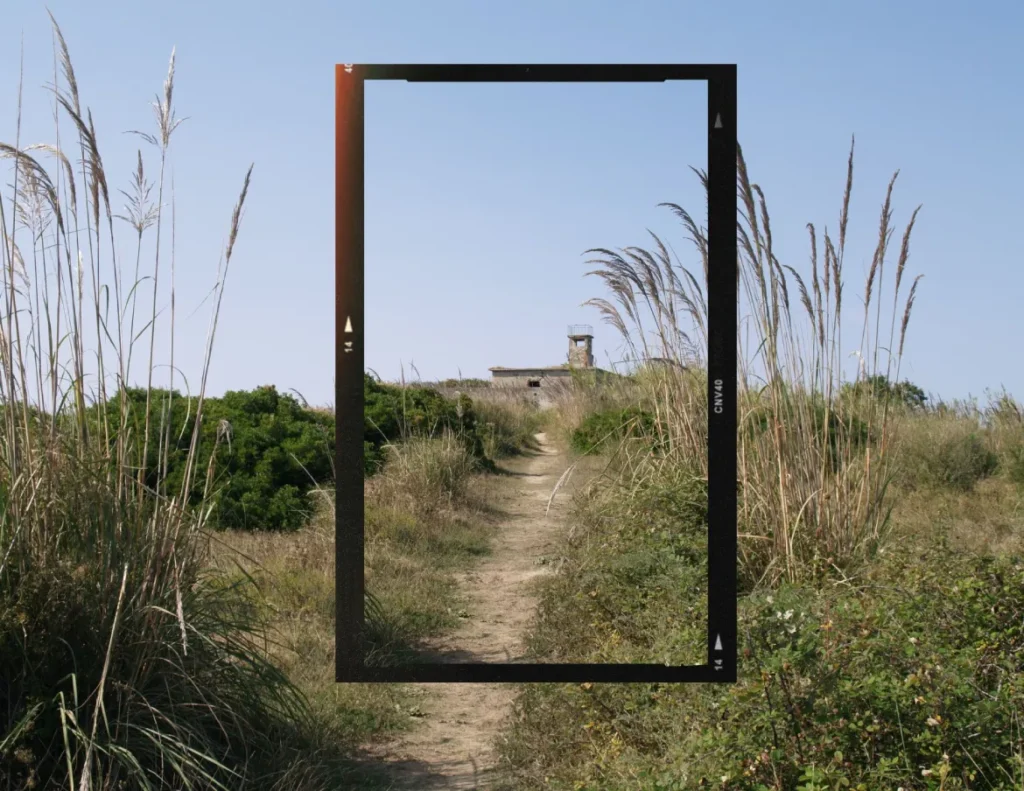
The structure consisted of several rooms, including offices, a kitchen, and bedrooms, and once served as observation posts. The local population also used it as a shelter for sheep. The fort, which can be climbed from inside the building, does not give confidence in safety. Vela Straža is a 10-minute walk from the lighthouse. It is not yet time to return to the lighthouse. Now we need to continue to discover one of the true views of Susak!
🗺️How to get there?
- From Gornje Selo. Coming by the sand pathway, you should be able to see it on your left as you approach the lighthouse.
- From Donje Selo. To get there first, head for the lighthouse, and then just follow the path. After 2 minutes, you should see the ex-military base right in front of you.
Cove Porat, an oasis of peace
Continuing our walk from Vela Straža, we discover new challenges in the west. The path, which invites us to explore hidden corners, gently descends towards the Porat Bay. Not long after the Vela Straža fortress, our steps lead us to a point from which a panoramic view of the entire bay opens. There, under a clear sky, as we enter Porat Bay, we feel our hearts connect with the sea breeze and our souls rest in the peace of this untouched landscape.

Porat Bay is one of those hidden places where the sea and greenery create a perfect picture of peace and beauty. The wide bay on the southwest side of the island is a real discovery. Quiet, authentic, but remote. This is exactly what we need in search of a corner of slowness. Here, time stops, allowing us to enjoy the moment and connect with nature in a unique way.
Although we did not go down into the bay, it completely fascinated us. The white sand on the seabed reflects sunlight, making the water appear blue. Here we can relax and enjoy the slowness, watching the sailboat sail without haste. Here we can boast of slowness, because it is the path to happiness and wisdom. Since it is located in the northwest, Porat offers a beautiful sunset. Now we have seen the real Susak, now it is time to get to know its heart. Let’s go back in the direction of the lighthouse.
The best viewpoint in Susak from the lighthouse
Lighthouses have always been attractive to any traveller, searching for stories and legends of pirates and hidden treasures. Yes, looking just like the ones in the stories, Susak has its own lighthouse. The highest point on this small island is 98 meters above sea level. Built in 1885 during the Austro-Hungarian rule, the lighthouse became a popular viewpoint. It was then that the island recorded its first tourist visits. The lighthouse was fully automated at the end of the 20th century. In the past, a fire was lit in the lighthouse in the evening, so that the light would burn until morning. Before electricity became available, light was also produced by burning propane-butane gas.
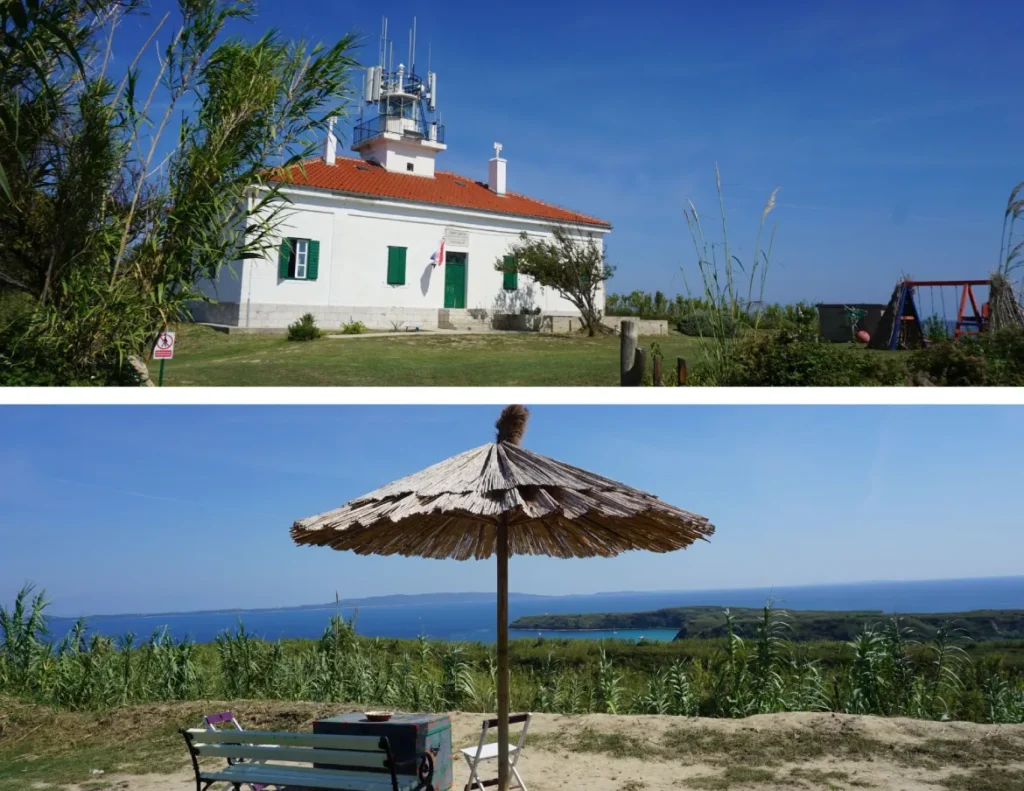
Apart from being a strategic point since prehistoric times, the lighthouse is also one of the most magnificent places on the island. It offers one of the most beautiful views of the distant horizon, making it a breathtaking place. Next to the lighthouse is a bench with a straw shade. What a sight! Yes, the views are truly beautiful, so don’t miss the opportunity to climb up here and enjoy this incredible experience. Although the lighthouse is automated, the lighthouse keeper and his family still live there. Unfortunately, it is not possible to enter the lighthouse.
Second part of the day: discovering the sandbar and swimming again
After we’ve already explored the many charms of this beautiful island, the second part of the day brings new excitement and new discoveries of sand. Sand? Haven’t we already discovered sand paths? Yes, but not the kind that are in the area from the lighthouse towards Donje Selo.
Through the sand passages to Donje Selo and swimming in the sand again
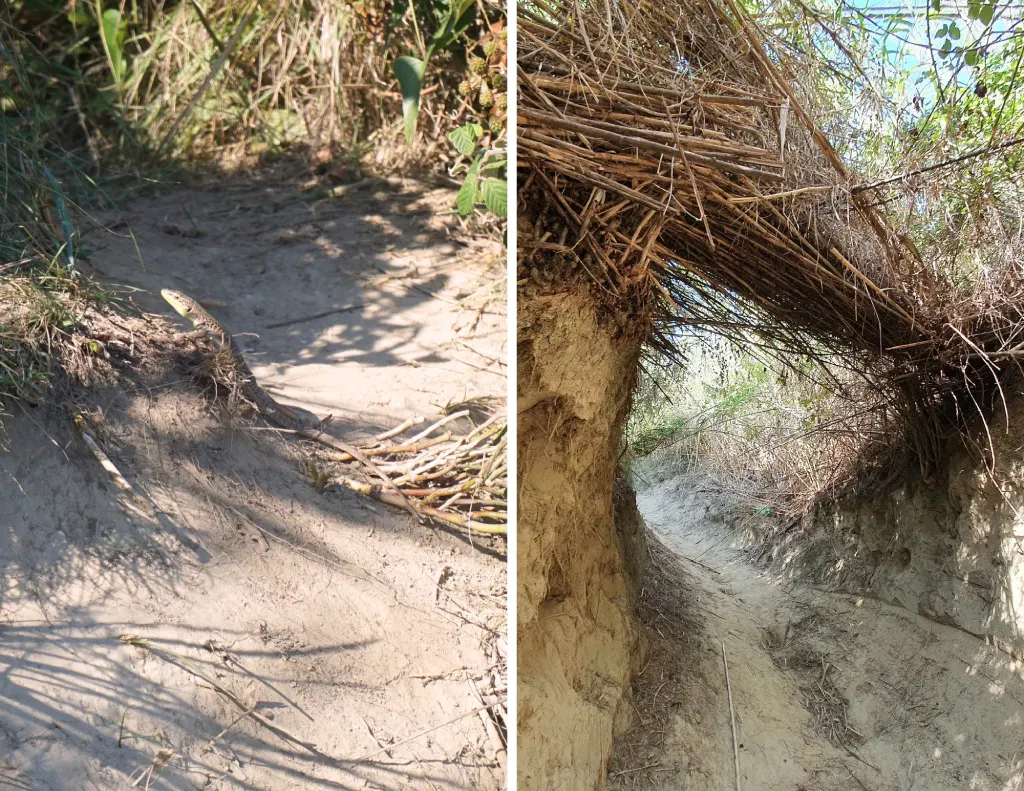
After resting at the lighthouse, it is the right time to embark on the adventure of discovering the sand passages, but also to indulge in the charms of swimming again. Descending from the lighthouse, it is as if we are passing through sand caves. These passages represent a unique part of the Susac landscape, a kind of natural path, dense vegetation and sandy paths. Walking through them, we feel as if we are surrounded by silence and peace, only occasionally interrupted by the wind or the singing of birds.
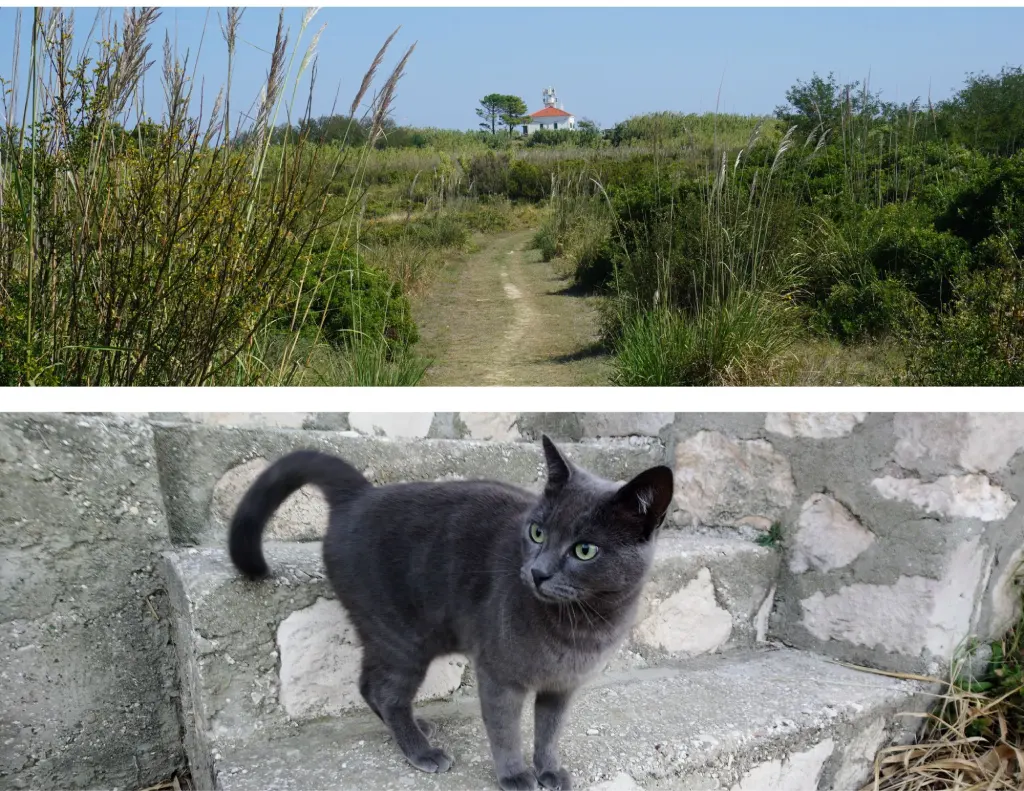
The sand vaults above us create a sense of wonder, while every step carries the promise of a new discovery. The sand passages are mysterious and undiscovered, giving us the opportunity to lose ourselves in the charms of the island. Some points will require more technical caution during wet weather. Ultimately, they will bring us to Donje Selo. There, right by the sea, we will find a coffee break in a cafe bar. And we still have time to swim and enjoy the beach of Spiaza.
Donje Selo
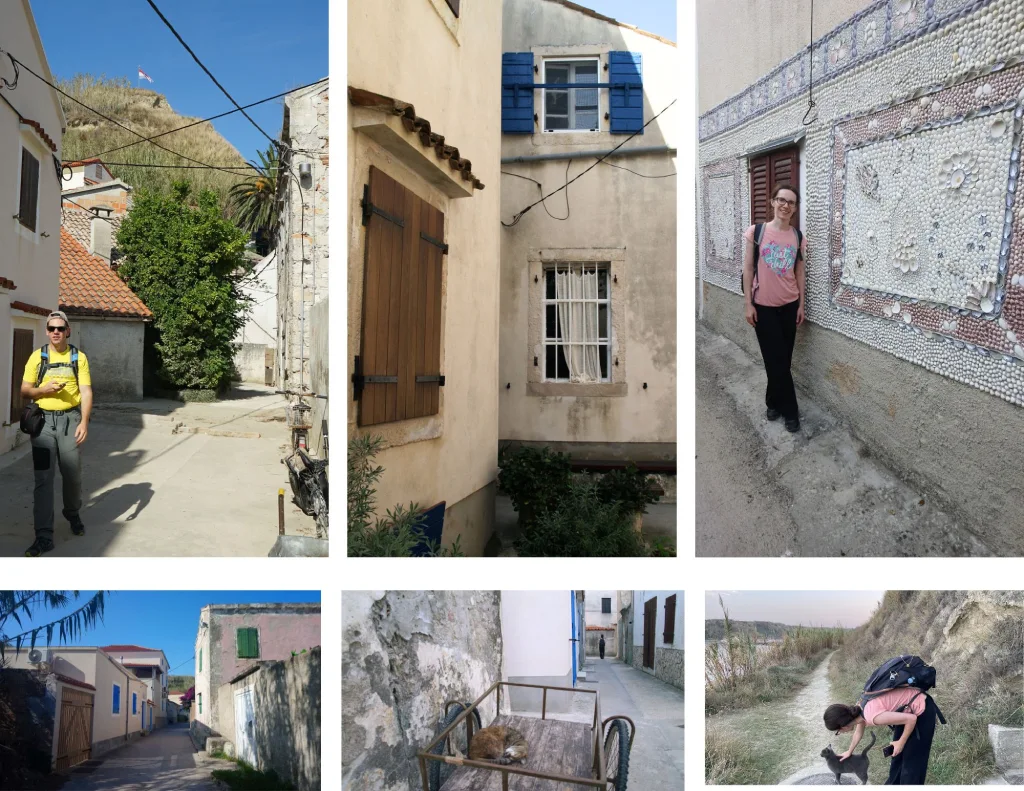
Although it is at the very beginning, Donje Selo was somehow left for last. It is true that during our tour we saw a school and a post office, and had a beer and a coffee, but the long streets of Donje Selo were somehow left for last. What I will remember them for the most are the cats, but also the richness of the colours on the house numbers. Reminding me of a tour of a small town in Malta, they leave a message about the Mediterranean.

Along one of the longest streets on the island, we see a series of connected houses, typical of island, or Mediterranean architecture. Admittedly, there are newer houses, but unfortunately, abandoned ones as well. Arriving at the end of the village, we come to a crossroads, from a familiar path, which, climbing the hill, would take us to the lighthouse. After the pier, we continue along the coast, where we see another, more isolated house, and after it, on the coast, we meet a playful grey cat. Playing with it, we barely noticed the ship, which was already sailing into the harbour. It sent us its last greetings from Susak. At least until the next time. Here, if you do nothing else, pause to let the breeze tousle your hair and watch the horizon shift from gold to blue—because on Susak, the sweetest memories are those made when you simply slow down and allow the island’s quiet magic to linger within you.
Discover the extra magic of Susak: come back for an extra bonus
In this article, I have described my adventure of searching for slowness and inspiring spots in Susak. Compiled based on previous visits and the possibilities of walking in one day, it is, of course, only a suggested itinerary. How and where to get around depends on your interests and desires. Below, I highlight some of the other possibilities Susak offers that may be interesting. Especially if you want to return to it.
Hidden coves
Although Susak is not a large island, it reveals coves with a combination of sand and rocks. The coves I mentioned above can be seen, mainly from the paths we walk. Walking through the centre of the island, the paths are at a higher altitude, so I would like to mention that to visit some of the coves, you need to go down to them or visit them by boat or kayak. This will require more time, and in some cases, technical difficulties. However, if you really want to visit Susak again, then choosing one of the coves to spend time slowly will be a real discovery.
- Baldarka Beach. Continuing to Spiăza Beach, to the west we see Baldarka Bay.Secluded, it is ideal for those seeking solitude, as it is almost never crowded. The small bay is covered with pebbles and dry seaweed.
- Punta Valica. A cove, mostly accessible only by boat, at the westernmost point of the island, is exposed to various winds. The island’s western cape is an area of currents, so during storms, the waves can be significant and unpredictable. The cove can be reached on foot via Baldarka Cove.
- Zali Bok Bay. For hikers who enjoy island hopping, Zali Bok is a discovery. The tiny, narrow bay, covered in large pebbles, is ideal for those seeking solitude or nature lovers. To reach the beach, which is characterised by vertical rocky sides, you will need some climbing skills.
- Nasuzanski Bay. The blue colour of the sea, enriched by sparkling waves and white sand, is enchanting. Although the sea occasionally brings some garbage, the bay hides stories on its rugged shore. At this place, driftwood and ropes were once used to build a small house that later served as a backdrop in the children’s series “Waitapu”, based on the 1987 book of the same name by Jože Horvat. A fortress once stood on the hill above the bay, but since it was built of wood and sand, there are no traces of it today.
- Obis Bay. Locatedon the southern part of the island, it was formed from two beaches: Veliki and Mali Ambisi , whose names refer to the heights of the cliffs. The bottom of the cliffs collapses vertically to a depth of 7 meters. Mali Ambis is a stone valley formed by stone extraction. It was used for building houses. Above the valley is a small cave. The Great Ambisis a set of several cascading shelves located on a steep cliff and is more difficult to access.
- Potarnak Bay. A small rocky bay covered in black tar, surrounded by magnificent rocky shelves formed during the quarrying period. The rich seabed with numerous cracks and holes gives this bay a special charm. On the left side of the bay, an underwater tunnel with a vertical opening brings additional interest. Through it, you can get to the mainland, but there are steep rocks.
Be active in Susak
The combination of sand and dust standing on the limestone plateau made this island attractive to outdoor and beach lovers. Though in this article, we already mentioned some of the attractions that require a mild hike to be visited, let’s sum up the best of them here. In addition to hiking, the island is purely perfect for sea buffs.
Hiking. Susak is simply to hike. Since there is no traffic, the only way to get around is on foot or by tractor. Whether one walks the heartland or the coastline, this island offers a magnificent hiking experience. The above-sea part is built entirely of sandy and dusty wood, overgrown with grass and reeds.
The best 3 Hikes to do while on Susak
- Hiking around Susak. The 12-kilometre trail will take you not only to hidden sand beaches but also to coves, cliffs, and tunnels. To do the whole circuit around the island on foot will take about 4-5 hours, with no breaks.
- Hike to Darto Cape. In addition to the Chapel of Our Lady of the Annunciation at Darto Cape, Darto Cape’s view must be experienced while on Susak. It will uncover why Croatian islets are so wonderful. The 5.25 km trail leads to the chapel, but to enjoy the view, continue along the narrow way to the sea.
- Hike to the lighthouse. The lighthouse is simply not to be missed while on Susak. The highest point of Susak, which we already mentioned (see the details in the lighthouse paragraph above), can be reached in two ways.
🧗Climbing. Another activity that could be done in Obi Bay is climbing. One part of the cliff is also equipped with mountaineering pegs. In addition to jumping, free climbing is also possible in that adventurous bay. However, bear in mind the direction is quite tricky, let’s say 6b+, so the climb would require a lot of experience! And I don’t think there are secure climbing levels. This would be required to take your own full equipment. If you’re climbing, fun, that’s ok. But if you’re most involved in the outdoors, it would be better to avoid the climbing.
🤿Diving. The most exciting place to dive around Susak seems to be the Obi Bay. There’s the Margarina, where they’re at a depth of 6 meters. There’s an exciting reef on its west side. Due to its seafloor’s centre, the underwater world in front of the bays is often visited by divers.
🐠Snorkelling. One can be snorkelling almost everywhere on the island. However, one of the best-recognised places to mention is maybe Potarnak Bay.
🚣Kayaking. Yes, the kayaking gazers will enjoy paddling and seeking the hidden coves of the sandy island. Some are best reached by boat, so finding them by kayak sounds perfect.
🪂 Cliff Jumping. Although Susak is known for its shallow sandy seabed, there are a few spots where the sea becomes significantly deeper. The most famous location is Obi’s Bay, where steep cliffs drop into deeper water, attracting adventurous visitors. ⚠️ Attention: Cliff jumping is not recommended. Jumping from several metres can result in serious injury. Please keep in mind that Susak does not have an emergency medical service. In case of an accident, assistance must come from Mali Lošinj, which may require transport by boat. Always consider the risks carefully and put safety first. So, cliff jumping, I do not recommend at all. Rather keep the sand 🏖️😊.
Susak Events
To be recognised as a quaint place rather than having a reputation for noisy gatherings, festivals, or any extensive public activities, there are a few activities on the island that one may like to join in.
Susak Music Festival
The event, usually held at the beginning of August since 2007, consists of classical concerts on the square. Those are in front of the church. The show proved to be a big success and has been one of the things that brought the island back to life.
Emigrants day
One day, the whole island comes to life, and the entire year is celebrated every last Saturday of July. It is in honour of the residents of Susak, who emigrated to other places and foreign countries in search of work. On this particular day, the village is washed and painted.
The schoolhouse converts a water cistern into an improvised stage for a concert. To this day, the island has been visited by both Croatian Leaders and ministers.
Susak Expo
The Susak Expo is a modern art festival held in Susak every two years in May. Herzog Dellafiore and Daniel Devlin founded it in 2006. The public space is used by artists attending the show as a platform for expressing their artwork.
Get more info here for the next Susak Expo.
Vineyard Party
Organised cultivation of grapes and the production made this tiny island known by sorts such as“Ilirija”, “Liburnija”, “Tojinščina”, “Muscat”, and “Cabernet Sauvignon”. In honour of this, a party is held in late autumn.
Corpus Christi procession
A procession occurs at St. Nicolas’ parish church in the upper village every July 15th, starting early in the morning. The crosses are taken from there to the lower town. The procession stops and prays at makeshift altars that are very finely decorated. There is a particular significance to each altar.
The entire trip finishes at the upper village parish church, where a holy mass is being celebrated. After the group, a banquet is usually held in the square in front of the cathedral.
While on Susak
Due to its location and good connections to other archipelago islands, Susak is ideal for day trips.
Unije
A typical Mediterranean island is located northwest of Susak, but in many ways it is very different from it. Unije is covered by low, rugged bushes and grass in most of its parts, among sharp rocks and cliffs, seeking soil for their roots. Unije is a hiking paradise too.
However, the flat plains in the southern part of the island resemble those of Susak. They are covered in a thin layer of yellow dust, so typical of Susak. Although Unije is much larger in area and height than Susak, the village there is much smaller than Susak’s.
How to get there:
A few local shipping lines and catamarans connect Susak and Unije with Mali Lošinj, making the island idealfor one-day trips. You can head from Susak to Unije early in the morning and make a return trip late in the afternoon, which should give you plenty of time to explore Unije.
Ilovik
The southernmost inhabited island of the Lošinj archipelago, with the eponymous fishing village, where about 170 inhabitants live today, is covered in evergreen Mediterranean vegetation, with holm oak trees standing out. In some of the places, there is a grove of Aleppo pine.
Due to the lush vegetation of oleanders, palms, roses, and other flowers, which bloom around almost every house, Ilovik Island is said to be an island of flowers. Probably the island’s distinctive feature is its tall eucalyptus trees. To have an excellent maritime and traffic position, the “Ilovički Kanal” (Ilovik Channel) has been used for anchoring since ancient times. So on the islands, we find traces of different historical periods.
The town of Ilovik is charming. It is located in a small bay protected from the north by the uninhabited island of Saint Peter, the cemetery of the locals of Ilovik. The coast is easily accessible from all sides, with many gentle bays. The largest bay with a sandy beach is Paržine on the island’s southeast side. All of it makes the island picture-perfect for a trip.
How to get there:
The local shipping lines and catamarans connect Susak and Ilovik with Mali Lošinj, making the island ideal for one-day trips. You can head from Susak to Unije early in the morning and make a return trip late in the afternoon, which should give you plenty of time to explore Unije.
Mali Lošinj
Being a part of the Cres-Lošinj islands group, which constitutes the western segment of the Kvarner islands inside the Kvarner Bay, the Lošinj Islands are very close to Susak. In fact, some of the administrative points of Susak are a part of the Lošinj Islands.
This, the 11th-largest island in the Adriatic Sea, is 33 km long and a hiking and general outdoor paradise. The highest island hill, the wooded Osoršćica (588 m), which stretches for some 10 kilometres along the northern part of the island, offers a breathtaking view extending to the rest of the islands. The island, which is much larger than Susak, is best known for its aromatherapy due to its abundance of Mediterranean plants. Mali Lošinj town is the organisational centre of the island.
🗺️📍How to get there?
The local shipping lines and catamarans both connect Susak with Mali Lošinj. There are daily ferry lines from Krk Island and Brestova (Istria) connecting the Island of Cres, which can also be used as a transfer point.
Male & Vele Srakane
These two tiny islands – Vele and Male Srakane (“large and small“ Srakane) are located west of Lošinj, between Unije and Susak. The island’s highest point is the hill of “Vela Straža” (Great Guard), 60 meters above sea level, on which a prehistoric hill-fort stands. The old citadel remains a semi-circular wall of a former fortress built to defend against sea raiders.
Trip Tip Note. By arriving at “Vele Srakane”, one leaves civilisation behind. There is no ferry service connecting the island, as it’s traffic-free. There are no shops on the island, so all the groceries, including water, have to be taken with you.
How to get there:
From Mali Lošinj. Srakane is connected with Mali Lošinj by a boat line. However, for the ship to dock at Srakane, one must warn the ship’s crew loudly and clearly in advance.
From Susak. The outdoor trip from Susak would be best made by boat or by kayaking.
Putokoza local tips for Susak
In addition to various sights and many activities that can be done at this small sand island, let me mention some of the recommended tips.
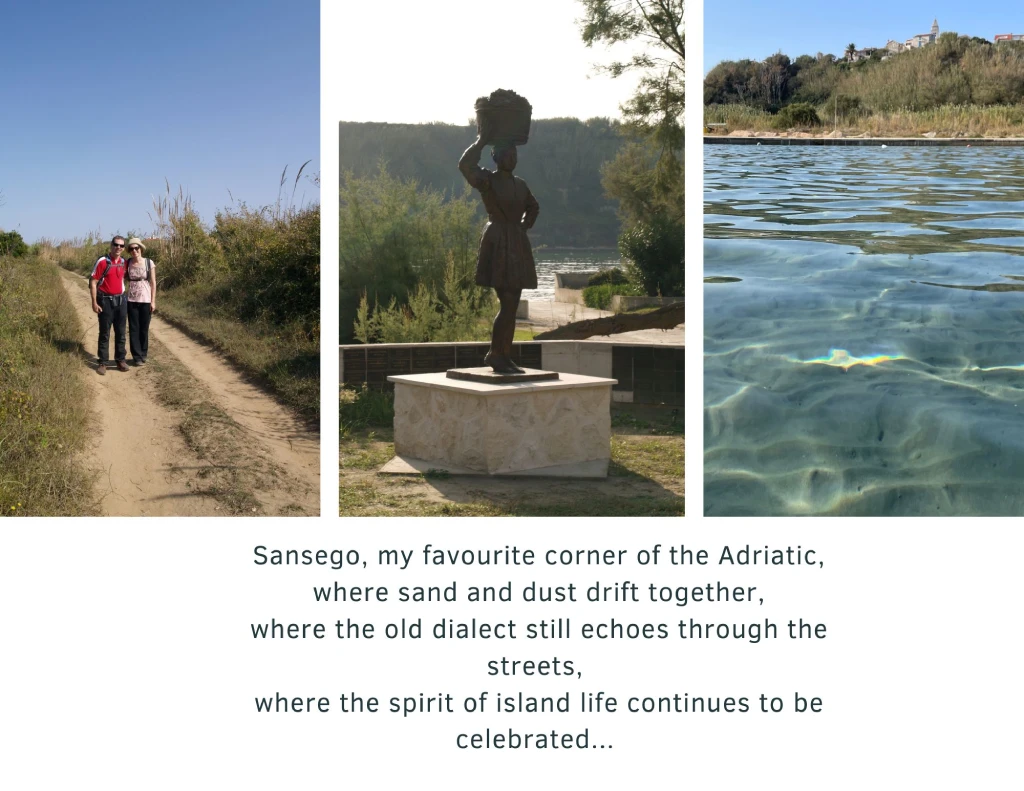
Practice “Fjaka“. This standard practice has been taken over in a larger part of the Dalmatian region rather than in Kvarner Bay. There is nothing more worth doing during the summer heat than finding some shade (which is on Susak’s hard mission, however) and getting some rest. “Fjaka” couldn’t be compared to anything else, as it is of Dalmatian origin. However, it could be in the vicinity of “siesta” to get a closer expression.
Have a drink in Bistro Sabbia. An outdoor seating bistro offers views of Susak’s busiest street and a glimpse of Spiaza beach. Located on the lower village‘s main street, it is an excellent spot to grab a snack or ice cream before you catch the boat going back to the mainland. So that we did. Or you can just order a coffee or a drink during the summer days.
Play Football/or beach volleyball on the sand. To get the full sand experience, get to play some of the matches on the sand. If you haven’t known that this tiny island has its own football club, trying to play a match on the sand to make a change from a volleyball routine would sound like a good idea.
Eat & drink. The only pâtisserie I saw on the island, Pâtisserie Susak, offers a modest selection of pastries and sweets, including ice cream. You can still order pizza in it. Tourists on their one-day visit to Susak often stop at Konoba Barbara, looking for refreshment or lunch.
However, since we still haven’t visited any of the island eateries, let’s look for more information by following this link.
Getting to Susak
Several ship companies connect the island with the mainland. Even though some daily lines connect the continent during the summer, the boats connecting the island are less frequent during the winter. The most frequent ferry operator to the island is Jadrolinija.
📍 GPS coordinates. Latitude: 44.511250. Longitude: 14.307150
✈️ By Air. The nearest airport is Rijeka Airport (RJK) on Krk Island. From there, travel to Cres and continue toward Mali Lošinj, where you can catch a catamaran to Susak. Another small airport for sports is located on Lošinj Island.
🚆 By Train. The main railway station in Rijeka is located at King Tomislav Square. From Rijeka port, regular catamaran lines connect to Susak. An alternative departure point is Pula. The railway station is next to the port, where catamarans to Susak depart (not daily—check the schedule in advance).
🚌 By Bus. Rijeka’s central bus station is located in Žabica, near the city centre. Rijeka is well connected with major Croatian cities and several international destinations (e.g., Munich, Trieste, Karlsruhe, Geneva). From Rijeka, continue by catamaran to Susak.
⛴️ By Ferry / Catamaran. Susak is accessible only by sea.
Regular catamaran lines operate from Rijeka and Mali Lošinj.
Some departures are seasonal, so always check the current timetable.
🚗 By Car. Susak is a traffic-free island — cars are not allowed. If you are travelling by car, drive to Mali Lošinj (the closest island with road access), park there, and continue to Susak by catamaran (approx. 10 km / 6 miles away).
Follow the link for more information on how to reach Susak from several ports. Note that all the boats are passenger-only, so you will need to leave your vehicle behind.
ℹ️ Things to Know Before Visiting Susak
🚑 Ambulance. Medical care on Susak is limited to a small infirmary run by nuns from the local convent. Minor injuries can be treated on the island, but more serious cases require transfer to Mali Lošinj by speedboat or, in emergencies, by helicopter from Rijeka.
📮 Post Office. Located on the main street of Donje Selo, the post office offers:
- Sending letters and postcards
- Buying stamps
- Public phone access
- 💱 Exchange office services
- 💸 Western Union
- 🏧 ATM (cash withdrawal)
🛒 Grocery Stores. There are two small grocery shops on the island:
- Market – the larger store, located near the harbour
- Saita – a smaller shop tucked away in the narrow alleys of the lower village
📶 Internet. Mobile internet is generally fast and reliable. Wi-Fi is available in some cafés and restaurants.
🏕️ Camping. Camping is not allowed on Susak. However, there are quality private accommodations available as alternatives.
🌊 Pollution. The island is generally clean and well-preserved. Occasionally, traces of tar may appear on some beaches due to ships discharging ballast water at sea. When exposed to the sun, the tar can become sticky.